
Kitchen gadgets and accessories worth having
Boiling-water taps, venting hobs, clever corner storage, hidden sockets and better lighting. What is worth having in a kitchen now, and what to check before you choose.
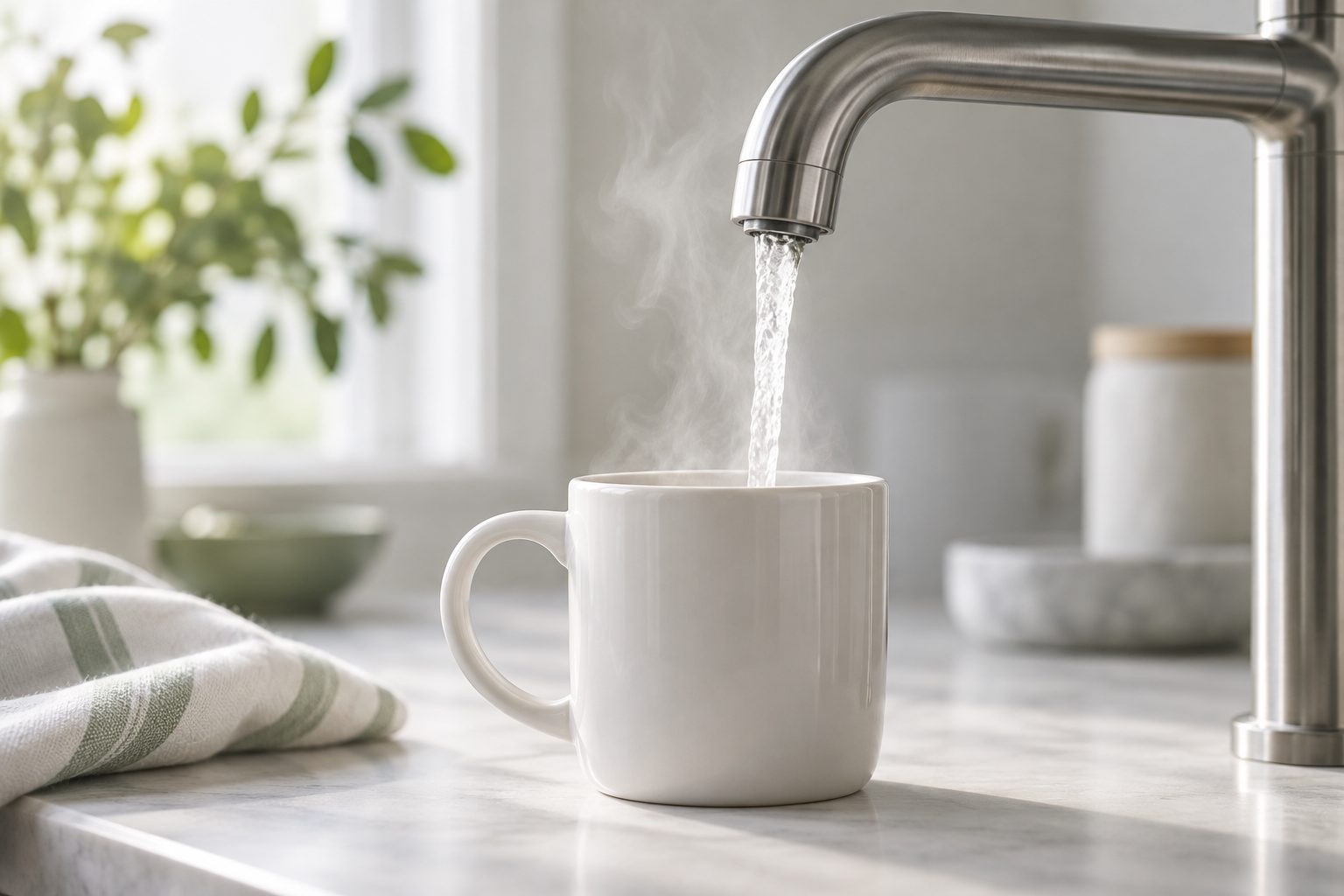
Some kitchen gadgets earn their place every day. Others end up at the back of a cupboard. This is a guide to the fittings and accessories that make a real difference to how a kitchen works, with the questions to ask before you commit to any of them.
Boiling-water taps
A tap that gives boiling water on demand is one of the most wanted kitchen fittings at the moment, helped by so many people making proper coffee at home. It frees the space on the worktop where the kettle used to sit, and it is quicker for a cup of tea or a pan of pasta.
Before you choose one, think about:
- Space under the sink. Most need a tank in the cupboard below, which takes room from your cleaning things or your bin.
- Filters and descaling. The filter needs changing regularly, and in hard-water areas scale builds up, so allow for the upkeep.
- Safety. If grandchildren visit, look for a child-safe handle that has to be pushed and turned at the same time.
- Fitting. Check whether you need a plumber or an electrician, and whether your sink has room for an extra tap or needs a combined one.
Venting induction hobs
A venting hob draws steam and cooking smells down through the hob itself, so there is no hood overhead. It suits islands especially well, where a hood can block the view across the room.
It works best when it is ducted outside through a short run, rather than recirculating air through a filter. Check where the duct would go and how much depth there is in the cabinet below, because the motor and ducting take up space that would otherwise hold drawers. Ask how loud it is at full power, too.
If you are moving from gas to induction, check your pans first. Induction only works with pans that a magnet will stick to.
Combination microwaves that air fry
Air fryers have moved from novelty to everyday cooking appliance. In a smaller kitchen, a combination microwave that also grills, bakes and air fries can do the job of several gadgets and free up worktop space. If you are building one in, plan the socket, the ventilation space it needs, and a heatproof spot nearby to put hot trays down.
Corner pull-outs and slim larders
Corner cupboards are where things go to be forgotten. Ways to fix that:
- Blind-corner pull-outs bring the shelves out and towards you, and are the easiest to reach into.
- Swing shelves in a kidney shape pivot out of the corner.
- Carousels turn so you can reach what is at the back.
A slim pull-out larder makes use of a narrow gap beside the cooker or fridge. Every shelf slides forward together, so tins and jars are never hidden behind each other. Measure the opening and check the door type carefully, as these fittings vary and not all of them suit every cabinet.
Pull-out recycling
A pull-out bin with separate compartments, close to the sink, makes sorting rubbish and recycling much easier than a single bin in a cupboard. A small food waste caddy under the main preparation area saves trips across the room. If you are keeping your existing units, a caddy that hangs on the inside of a cupboard door is a simple addition.
Hidden charging and pop-up sockets
Pop-up sockets rise out of the worktop when you need them and sit flush when you do not.
These suit things you plug in now and then, not appliances that stay plugged in all day. The important point is timing: decide on them before a new worktop is cut, because the hole and the wiring have to be planned in from the start.
Under-cabinet and plinth lighting
Under-cabinet strips light the worktop directly, so you are not working in your own shadow. Plinth lighting along the bottom of the units gives a soft glow in the evening and makes the units look as if they float.
Plan the cable runs, where the switches and dimmers go, and the colour of the light. A warm white feels welcoming, while a cooler white is crisper for preparing food.
A kitchen that is easier to use as we get older
Some of the best kitchen changes are the ones that make everyday tasks easier for years to come:
- Drawers instead of deep cupboards. Full-extension drawers bring everything into view, with no kneeling to reach the back.
- D-handles. A D-shaped handle is far easier to grip than a small round knob, especially with stiff fingers. Choose a shape that will not catch a loose sleeve.
- Good task light. Bright, even light over the worktop, hob and sink makes chopping and reading labels easier.
- Everyday things between hip and shoulder height. Keep the plates, mugs and pans you use daily in the band you can reach without stooping or stretching. Heavy things go low in drawers, light things up high.
- Contrast. A worktop edge that contrasts with the doors or the floor is easier to see.
Many of these can be done on existing units. New doors with better handles, drawers in place of a cupboard and lighting under the wall units can all go into a kitchen that is otherwise staying put.
Plan before you buy
A boiling-water tap needs cupboard space, a venting hob needs depth and a duct route, and pop-up sockets need wiring before the worktop is cut. If you are changing your worktops or fitting a new kitchen, decide on these things first.
If your units are sound, replacing the doors and worktops saves you replacing the whole kitchen, and it is a good moment to think about handles, lighting and storage at the same time. Book a free home visit to talk it through, with no obligation.
