
Choosing a kitchen splashback for everyday cleaning
Choose a splashback around washing up, cooking and the marks you notice most. A practical guide to smooth panels, tiles and a finish that works with your worktop.
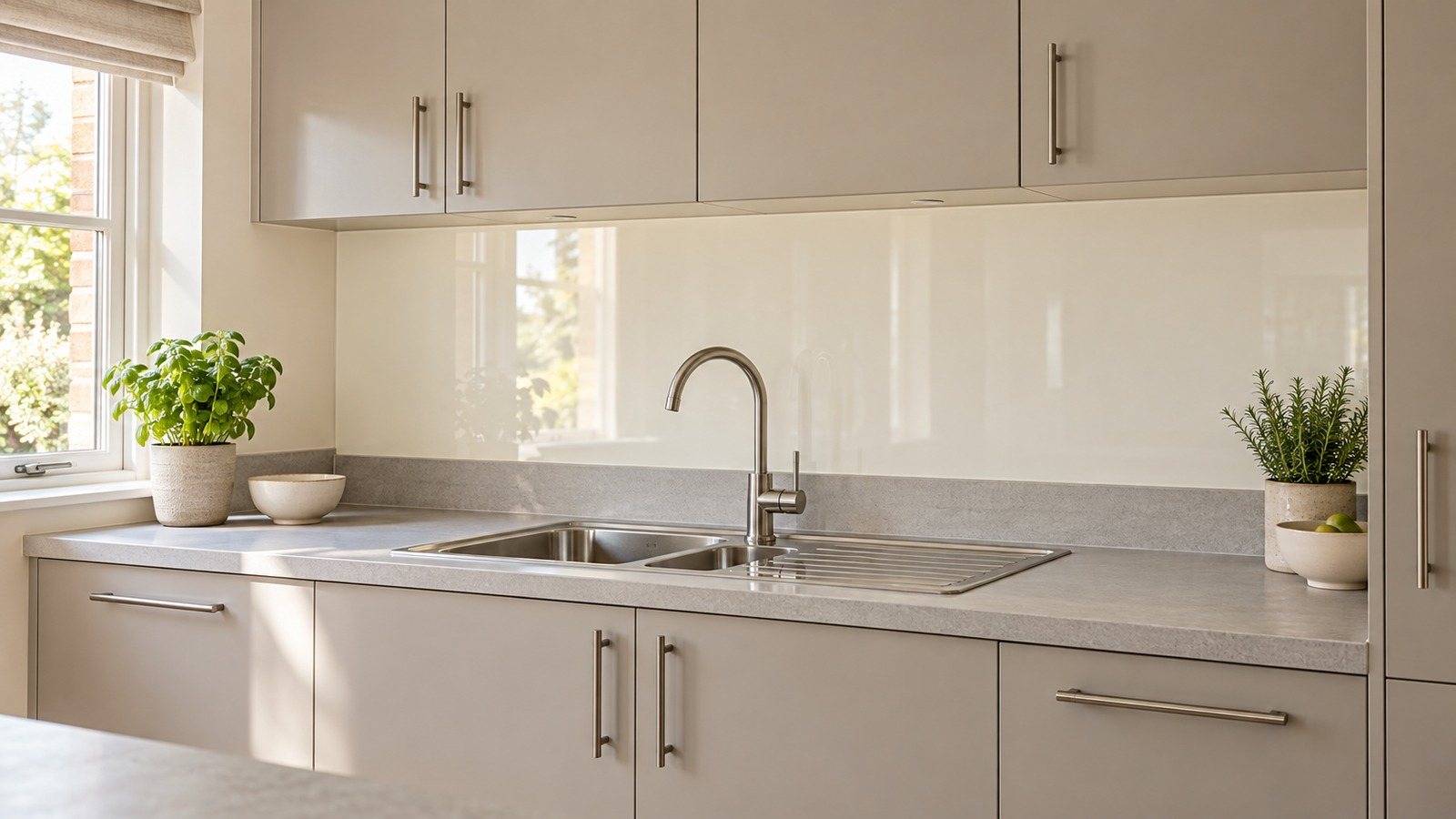 Example
A splashback has a busy job. It catches the splashes from washing up and the marks left by everyday cooking, while taking up a very visible part of the room. Choosing it around your routine can make a kitchen refresh feel easier to live with, as well as lovely to look at.
Example picture: made by computer to show a kitchen with a plain glass splashback and clear worktop. Colours on screen are a guide.
Start with the marks you notice
Look at your current kitchen before choosing a finish. Is the wall behind the sink always dotted with water? Do cooking splashes reach beyond the hob? Does wiping the grout feel like a chore? These small frustrations are useful clues. They help you decide where you want a smooth surface and how much wall you would like to cover.
Think about what stays on the worktop, too. A splashback can be easy to wipe, but less convenient to reach if utensils and jars sit along its whole length. Leave some breathing room around the places you clean most often.
Smooth panels or tiles?
Glass gives a broad, smooth surface with little to interrupt the look. A plain colour can sit quietly behind the worktop and make the room feel settled. Reflections will change as daylight moves through the kitchen, so view samples in your own light before deciding.
Acrylic and aluminium splashbacks are also options to discuss. Ask which material is suitable for each position, particularly around your cooking area. The right choice needs to suit the appliance and the way the splashback will be fitted.
Tiles offer another way to bring texture or a gentle pattern into the room. Think about the grout as part of the design. A colour close to the tile keeps the pattern quieter, while a contrasting colour makes the joints more noticeable. Consider whether you will enjoy looking after those joints as much as you enjoy the tiled finish.
Let the worktop guide the pattern
Put splashback and worktop samples beside each other. If you like Fine-Veined White Marble Effect, a plain splashback lets the veining remain the main detail. With Plain Light Grey, softly textured tiles could bring interest to an otherwise simple scheme.
Neither surface needs to compete for attention. Try standing back from the samples rather than judging everything close up. Include a door sample as well, so you can see how the whole combination feels.
Plan the edges before the finishing touches
Decide where the splashback will stop. Look at corners, windows, wall cabinets and sockets. A clear stopping point helps the finish look considered, especially where the kitchen opens into a dining space. An upstand may suit quieter stretches of worktop, with fuller coverage where splashes are common.
Kitchens MK supplies and fits upstands, tiles, glass, acrylic and aluminium splashbacks. If your cabinets are still sound, you can keep them and consider new doors, worktops and a splashback together. Keeping good cabinets is an environmentally friendly choice.
To see samples in your own kitchen, book a free home visit. The designer brings door and worktop samples, then your quote is emailed so you can decide in your own time, with no pressure.
